

Most silted ponds are cleaned out by drawing the water down, letting the muck dry enough to carry a machine or be reached from the bank, then digging the silt out and putting it somewhere it will not wash straight back in. The clean-out lasts longer when the erosion feeding the silt is slowed too.
Signs a pond has silted in
A silted pond gets shallower year by year. The edges creep in, a fan of mud builds where the water enters, and the pond holds less after a dry summer than it used to. Weeds take over the shallows and the water stays muddy after rain.
OSU Extension lists eroding soil in the watershed as a problem because sediment can create shallow areas prone to emergent weeds. That is why a weedy pond is so often a silted pond, and why digging it back out can do more than treating the weeds. Put simply, a pond that has gone shallow and weedy is normally full of silt, not leaking.
Where the silt comes from
Silt is soil that washed in from the drainage area above the pond. Bare ground, gullies, cattle trails down the bank, plowed fields and construction upstream all send dirt in with every heavy rain. A clean-out removes what has built up, but if the source is still running, the pond starts filling again straight away.
Look at the ground that drains into the pond before the clean-out is planned. Grassing bare areas, keeping cattle off the banks in places and slowing water in gullies all help. The Oklahoma Conservation Commission supports the local conservation districts, and NRCS offers planning help for landowners, so your county conservation district is a good first call about the drainage area. OSU Extension can help with fish and water questions.
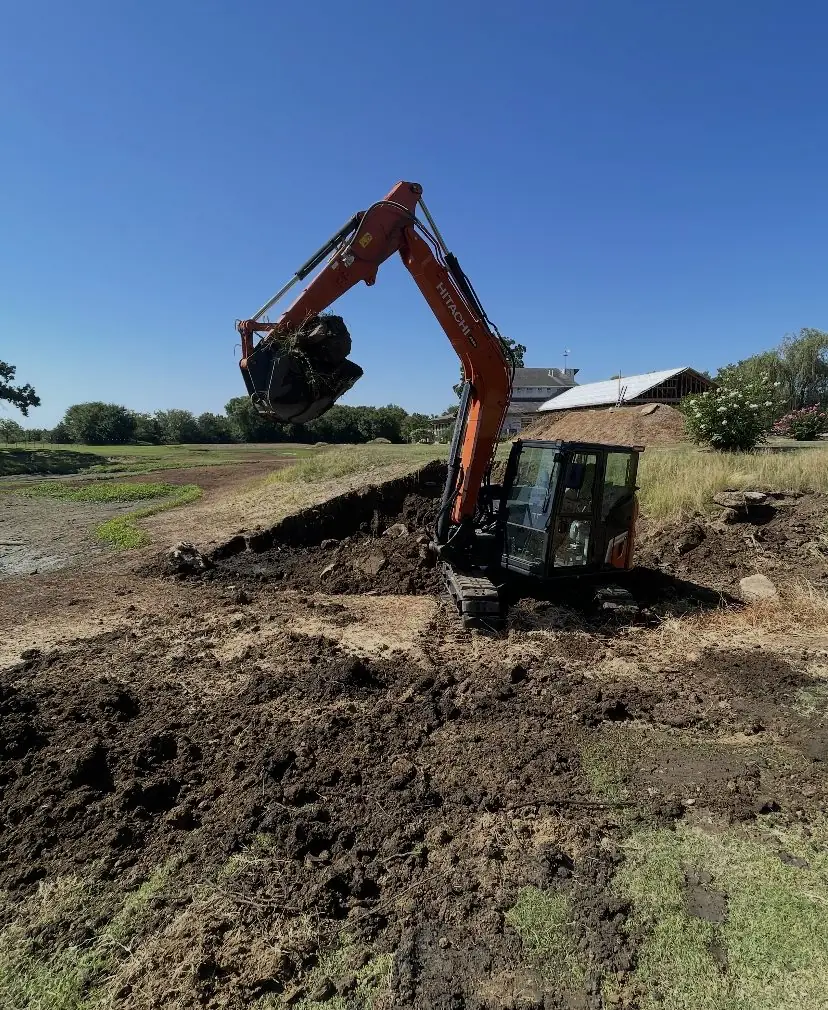
Drawing the pond down
Silt is far easier to dig when there is little water over it. Some ponds have a drain pipe that lets the level down. Others are pumped, or the clean-out is timed for the end of a dry spell, when the pond is already low. Think about where pumped water goes, because it should not flood a neighbour or a road.
Fish are part of the plan. If you want to keep them, talk to OSU Extension or the Oklahoma Department of Wildlife Conservation about what to do before the level drops. After the water is down, the muck usually needs time to firm up. Wet silt is heavy and soupy, and a machine sent onto it too soon gets stuck or just pushes it around.
Digging the muck out
How the silt comes out depends on how dry it is and how big the pond is. An excavator can reach from the bank and from a firm working pad. Once the bottom has dried enough, a dozer can push silt toward a loading point. Larger ponds are often worked in sections so the machines always have firm ground under them.
The aim is to take out the silt and stop at the original basin. Digging through the clay that seals the bottom can leave a pond that will not hold water again. The banks are reshaped as the silt comes out, and the edges can be cut a little steeper so there is less shallow water for weeds. The dam and spillway get a look while the water is down, because that is the easiest time to see seeps and cut-outs.
Where the spoil goes
Pond silt is wet, fine and slow to dry. It should be spread somewhere it can dry out and will not wash straight back into the pond in the next storm. Once dry, it can be spread over a pasture, used to build a pad or an approach, or shaped into the bank. It should not be left as a spoil ring around the pond, where rain carries it back in.
Plan the spoil area before the clean-out starts, with enough room and a route for the machines to reach it. If the spoil is going to build up a bank or a pad, it has to dry first and be placed and compacted in layers, like any fill.
Rules and who to ask first
Most farm pond clean-outs are simple, but a few situations bring rules. The Oklahoma Water Resources Board says plans to build or modify a dam of jurisdictional size must be reviewed and approved before work begins, so ask the OWRB if the clean-out includes raising or rebuilding a large dam.
If the pond sits on a creek or stream, or the work reaches wetlands, ask the US Army Corps of Engineers Tulsa District regulatory office, which reviews construction activities in the nation's waters, including wetlands. A locate request through OKIE811 comes before any digging near buried lines, as the OKIE811 guide explains. Rules depend on the pond and the property, so confirm with each office rather than assuming.
Clean-out or new pond: have Justin look
A clean-out reuses the dam and basin that are already there, which is why it usually costs far less than digging somewhere new. It is not always the answer. A dam that seeps or a spillway that has cut out may need repair first, and some ponds sit in the wrong place to ever stay clean. The pond cost guide covers what moves the price of new work, and the pond building guide covers site and soil.
Justin looks at the silt, the dam, the spillway and the ground that drains in, and tells you plainly what a clean-out will and will not fix. See pond excavation and clean-out, and call Justin at (918) 240-3392 to set up a visit.
The Short Version
- A shallow, weedy pond is usually silted in, not leaking.
- Draw the pond down and let the muck firm up before the machines go in.
- Dig out the silt and stop at the original clay seal.
- Spread the spoil where it can dry and will not wash back in.
- Slow the erosion above the pond or it will fill again.
Quick Answers
When is the right time of year to clean out a pond in Oklahoma?
Usually late summer or a dry spell in fall, when the water is already low and the silt has a chance to dry. Wet seasons make the muck soupy and slow everything down.
Do the fish have to come out before a pond clean-out?
If the pond is drawn right down, most fish will not survive in what is left. If you want to keep them, ask OSU Extension or the Oklahoma Department of Wildlife Conservation before the level drops.
Can a pond be cleaned out without draining it?
Some silt can be dug from the bank with water still in, but it is slow and messy work. Most clean-outs draw the water down so the silt can be reached and loaded.
How do I stop my pond from silting in again?
Slow the erosion in the drainage area: grass bare ground, keep cattle off parts of the bank and slow water in gullies. Your county conservation district and NRCS can help plan that.
See the pond excavation service or call (918) 240-3392.