

Trenching for a new water, sewer or electric line around Tulsa usually involves three parties: the excavator who digs, beds and backfills the trench, the licensed plumber or electrician who lays and connects the line, and the utility that owns the line up to its side of the meter or connection. Sorting out who does what, and getting locates in through OKIE811, before anyone digs keeps a trench from sitting open waiting on the next person.
What utility trenching covers
Most utility trenching around Tulsa is one run on a home or acreage property: a water line out to a shop or a barn, electric conduit to a detached garage, a well or a gate, a sewer line being replaced, or a line that has already broken and has to be dug up and exposed.
The digging is the part an excavator does. The trench is cut to the depth and grade the line needs, the pipe or conduit is bedded, and the trench is backfilled and compacted so it does not sink into a groove across the yard six months later. The underground utilities service covers what Justin takes on.
Who owns which part of the line
Before anyone plans a route, it helps to know whose line it is. For water, the City of Tulsa describes two parts. The utility-owned service line connects to the water main and sits in the right-of-way, and the City owns it. The customer-owned service line is the pipe under the property that connects to it. That customer side, under your yard, is the part a private trench usually involves.
Electric and gas work the same basic way: the utility owns its lines up to its side of the meter or connection, and anything past that belongs to the property owner. If the job is a new service from a utility rather than a line you own past the meter, call that utility before the trench is planned, because it sets its own rules for anything it owns or will connect to.
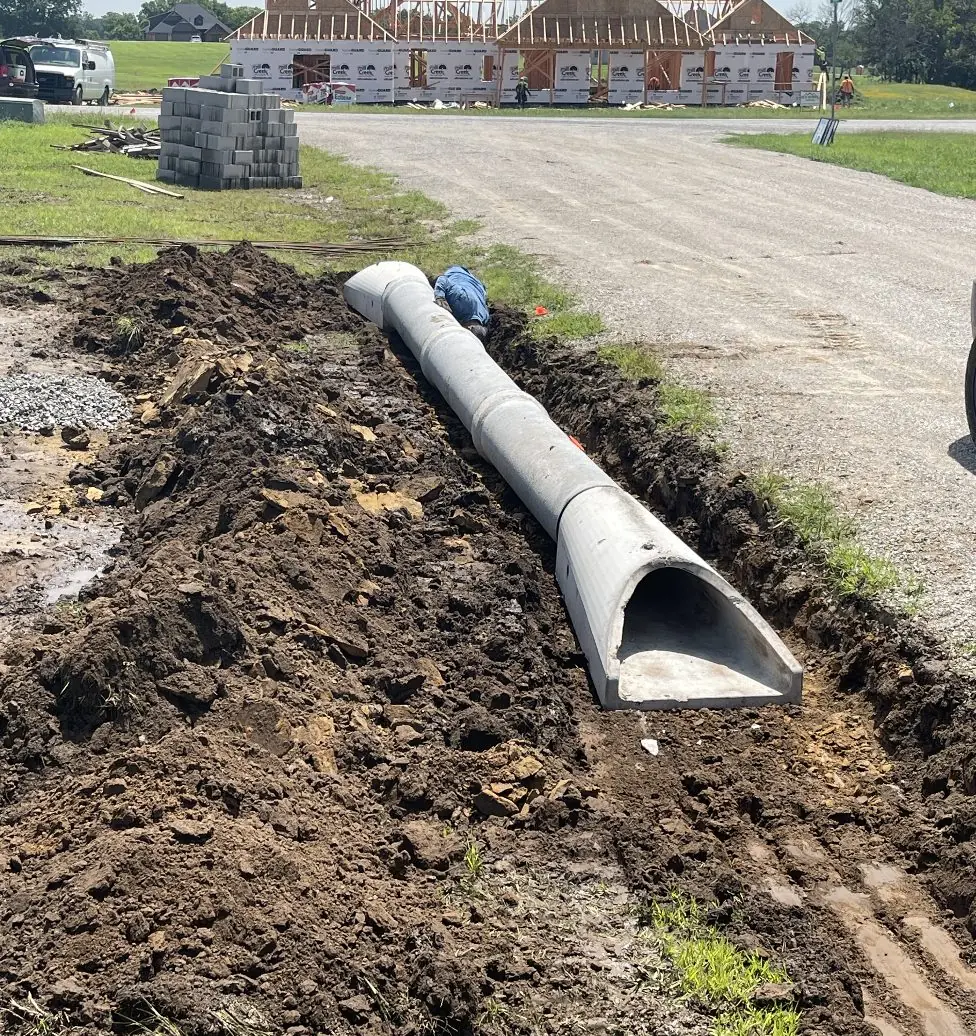
Who connects the line
An excavator digs, beds and backfills. The connection itself is licensed work. In Oklahoma, the Construction Industries Board administers the Plumbing License Law and the Electrical License Act, so a water, sewer or electric line is laid and connected by a licensed plumber or electrician.
Ask the plumber or electrician whether the job needs a permit and an inspection, and whether the inspector has to see the line before the trench is backfilled. How deep the line has to sit depends on what it is, and the trade sets that to the code they work under; the trench is cut to match. On a job with Justin, he does not do the plumbing or electrical hook-up, and the two get scheduled together so nobody is standing around.
Locates and private lines
Before any digging in Oklahoma, locates go in through OKIE811, either by calling 811 or online at okie811.org. OKIE811 asks for the request at least three business days before you plan to dig, and requests are valid for fourteen calendar days. The OKIE811 guide covers the color code and how close to a mark a machine can work.
The catch on a utility job is private lines. Utilities mark their own lines, so a water line already running to a shop, private electric to an outbuilding, sprinkler lines or a septic line usually will not be marked. Point them out when the job is walked, or have a plumber or private locating company find them first.
Route, driveways and the yard
The route decides most of the job: how long the run is, how deep it has to go, what it has to cross, and how a machine gets to it. Trees, fences, flower beds and existing lines along the way all matter, which is why the route is walked and agreed before any digging.
If the line has to cross a driveway, it can often be bored under or the drive can be cut and patched back; that gets priced up front. Where a drain or downspout line is going in at the same time, it can sometimes share the work, as the guide to burying downspouts explains. When the line is done, the trench is backfilled, compacted and graded back so the yard can be seeded or used again.
What to have ready when you call
What the line is for, where it starts and where it needs to go, roughly how long the run is, what it crosses, and who the plumber or electrician is if you already have one. Mention any private lines you know of. That is enough for Justin to tell you whether it is a fit and set up a look at it.
Call Justin at (918) 240-3392 or use the form on this page. He works Tulsa and the towns around it, walks the route with you, calls in the locates, and gives you a number before anything starts.
The Short Version
- Know whose line it is: the utility owns its side, the property owner owns the line past the meter.
- Licensed plumbers and electricians connect the line; the excavator digs, beds and backfills.
- Ask the trade about permits, inspections and depth before the trench is dug.
- OKIE811 needs at least three business days, and private lines usually are not marked.
- Walk the route first: length, depth, what it crosses and how it is put back.
Quick Answers
Do you do the plumbing or electrical hook-up?
No. Justin digs, beds and backfills. The licensed plumber or electrician lays and connects the line, and the two get scheduled together so the trench is not left open waiting.
Will OKIE811 mark the water line out to my shop?
Usually not. Utility companies mark their own lines, and a line you own past the meter generally is not marked. Point out any private lines you know of before the digging starts, or have a plumber or private locating company find them.
Who owns the water line under my yard in Tulsa?
The City of Tulsa describes the customer-owned service line as the pipe under the property that connects to the utility-owned line, and the utility-owned line in the right-of-way as owned by the City.
Can a line go under my driveway without tearing it out?
Often. A line can sometimes be bored under a drive, or the drive can be cut and patched back. It gets looked at and priced before the machine shows up.
See the utility trenching service or call (918) 240-3392.